
Charlotte · Mecklenburg · Union · Cabarrus · York
Seal the crawl space.
Dry the house.
Crawl space encapsulation for Charlotte-area homes: 20-mil liner on the floor and walls, sealed vents, a dehumidifier sized to the space, and the North Carolina closed-crawl-space permit handled. It starts with a free inspection and photos of everything under your house.
Symptoms
Signs your crawl space is wet
Most homeowners never go under the house. These are the clues that show up upstairs first.
- S/01
Musty smell
strongest in the hallway or closets on humid days
- S/02
Cupping floors
hardwood edges lifting, or floors that feel soft or bouncy
- S/03
Sticky house
indoor humidity above 60% even with the AC running
- S/04
Falling insulation
wet fiberglass batts sagging out of the joists
- S/05
Water after storms
puddles or mud under the house a day after rain
- S/06
Sweating ducts
condensation dripping off ductwork and pipes in summer
- S/07
Bugs and mold
camel crickets, termite tubes, white or black growth on wood
- S/08
Cold floors
first-floor rooms that never feel warm in January
Why here
Why Charlotte crawl spaces get wet
Most crawl spaces in the Piedmont were built vented, with a sheet of thin plastic on the dirt. Three local facts work against that design.
68–72 °F
Summer dew points
Charlotte summers are humid enough that outdoor air carries more water than a cool crawl space can hold. Pulled in through open vents, it condenses on joists, ducts and pipes. In July, vents add moisture instead of removing it.
Red clay
Piedmont soil
The dense red clay under most of Mecklenburg drains slowly and stays damp for days after a storm. Bare or thinly covered, it gives off water vapor into the crawl space around the clock, and low corners hold puddles.
NCRC R409
Closed crawl space code
North Carolina's residential code has its own section for closed crawl spaces: a sealed ground cover, closed vents and a required moisture-control method. Converting a vented crawl space is permitted work, inspected by the county.
The system
A closed crawl space, layer by layer
Encapsulation is not one product. It is six pieces that only work together, in this order.
-
1
Drainage & sump
$2,000–$5,000If water gets in at all, it leaves first: a gravel trench and perforated pipe along the low walls, into a sealed sump basin with a pump.
-
2
20-mil liner
in full jobReinforced liner over every inch of dirt, up the block walls and around every pier. Seams overlapped and taped, top edge fastened and sealed.
-
3
Sealed vents & rim
in full jobFoundation vents closed with fitted foam; closed-cell foam on the rim joist, where most outside air actually leaks in.
-
4
Dehumidifier
$1,800–$3,000A crawl space unit sized to the volume, draining to the sump or outside. This is the moisture control NC R409 requires.
-
5
Wood & structure
after inspectionSupplemental steel jack posts under sagging girders, sistered joists where rot has set in, mold treatment on stained framing.
-
6
Sealed access door
$300–$800An insulated, gasketed crawl space door, so the opening you use most is not the leak you forgot.
Before / after
What the inspection report looks like
Every inspection ends with photos and readings, not a sales pitch from the driveway. Here is the kind of crawl space that turns up under a 1970s brick ranch in east Charlotte, and the same space after encapsulation.
Example photos for illustration.
Crawl space inspection
Example findings

Before
- ✕Standing waterpuddle at the low pier after rain
- ✕Ground coverthin, torn plastic over bare red clay
- ✕Insulationwet fiberglass hanging out of the joists
- ✕Ventsopen, pulling in 70 °F dew point air
- ✕Framingmildew staining on sill and joists

After
- ✓Standing waternone; low corner drained to a sump
- ✓Ground cover20-mil liner, floor, walls and piers
- ✓Insulationwet batts removed, rim joist foamed
- ✓Ventssealed from inside with fitted foam
- ✓Humiditydehumidifier holding the space near 50%
Process
From flashlight to dry in four steps
-
01
Inspect
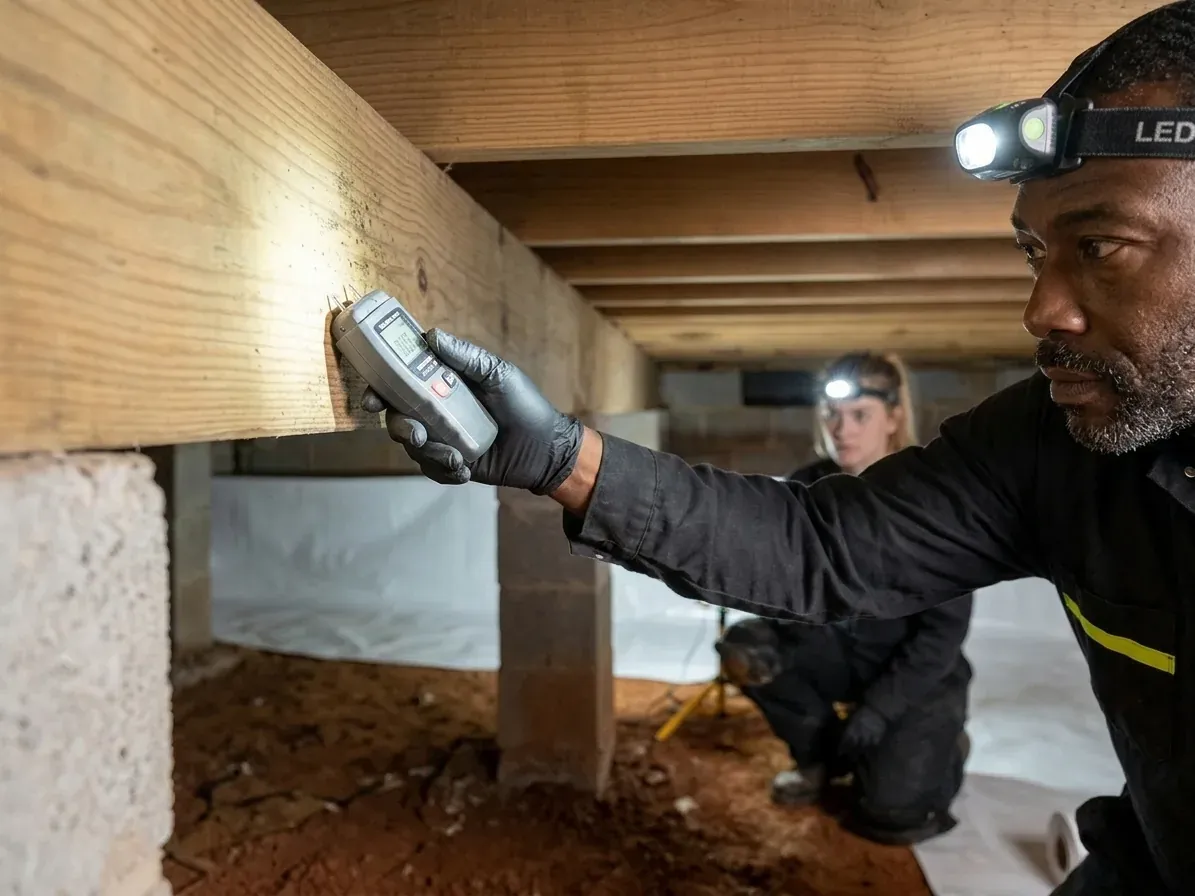
An inspector crawls the whole space with a flashlight and a moisture meter: humidity, wood moisture in the joists, standing water, insulation, vents, ductwork, pests and any sagging framing. You get the photos.
-
02
Prep and drain
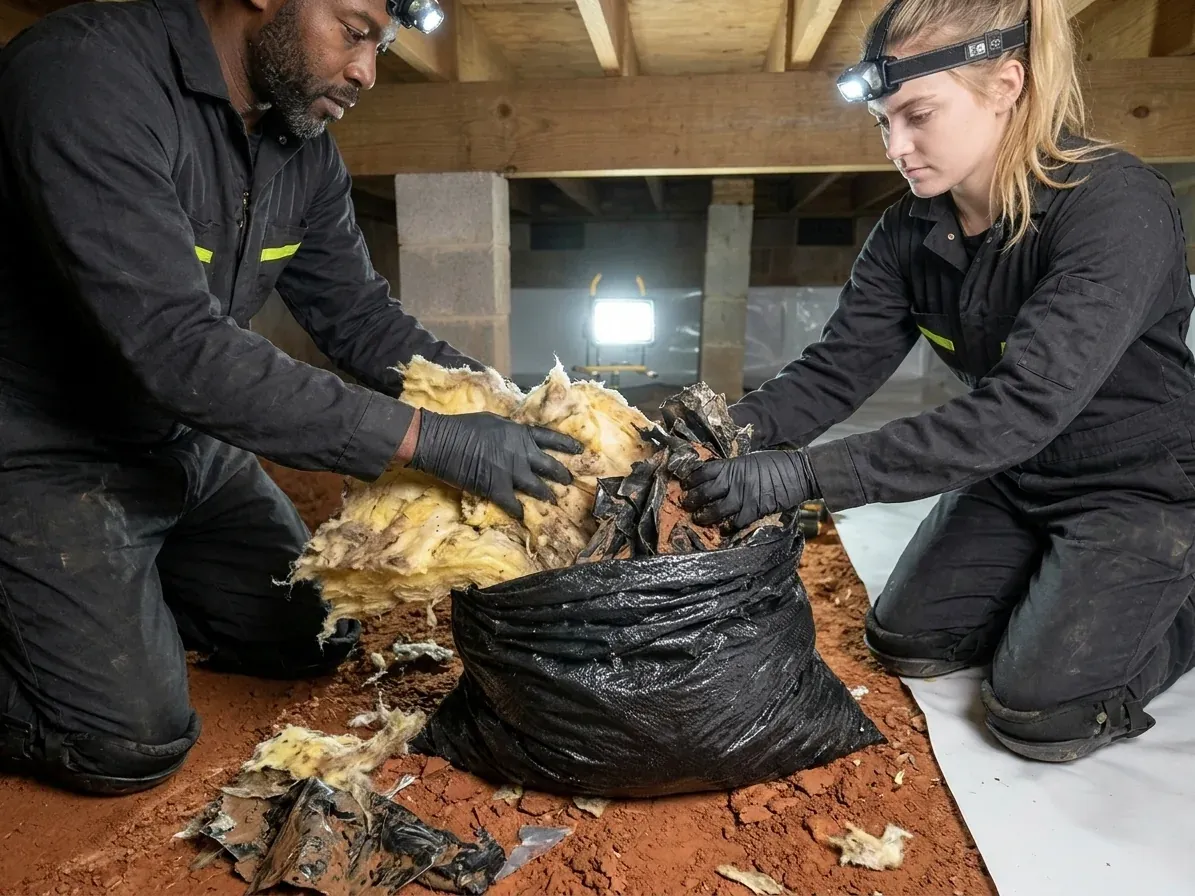
Wet insulation and old plastic come out. If water collects anywhere, a perimeter drain and sump go in before anything gets covered.
-
03
Line and seal
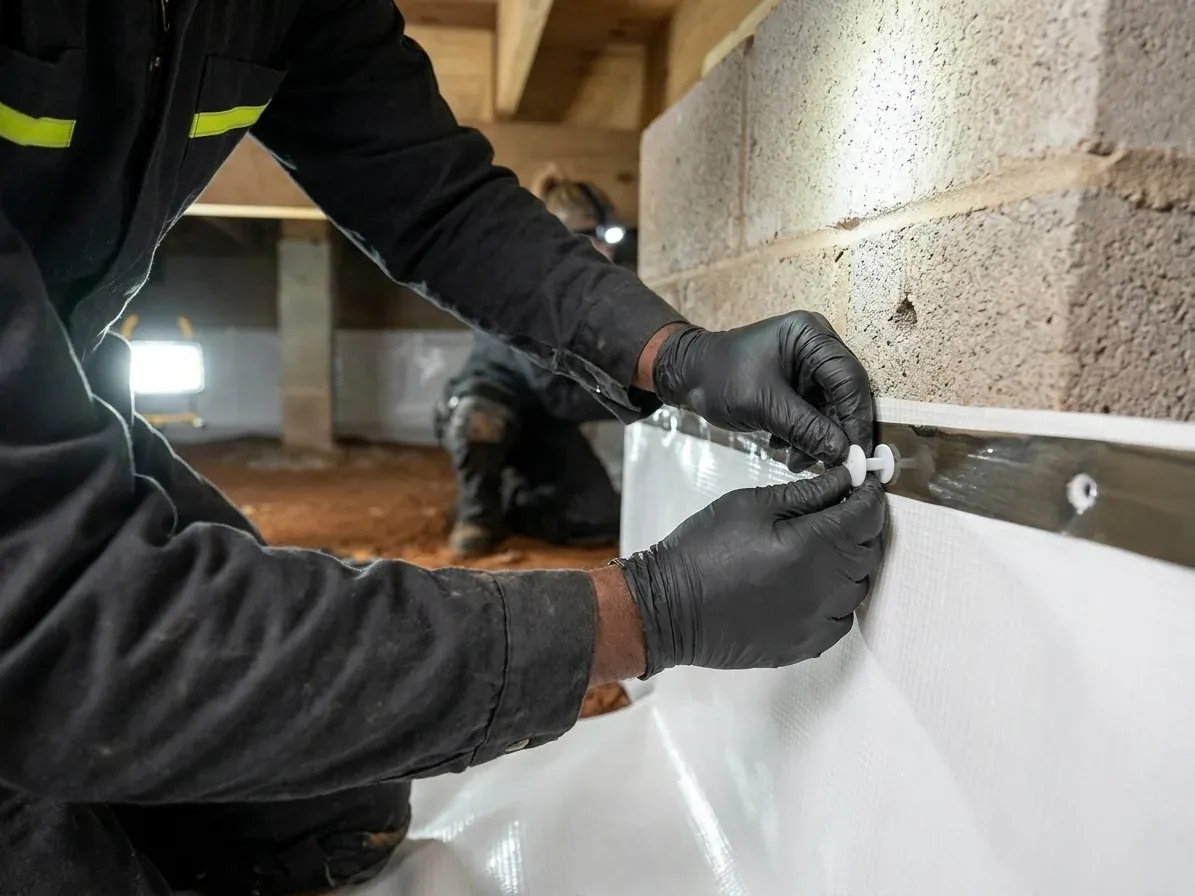
20-mil liner over the floor, up the walls and around every pier, seams taped and the top edge fastened. Vents and rim joist sealed.
-
04
Dry and verify
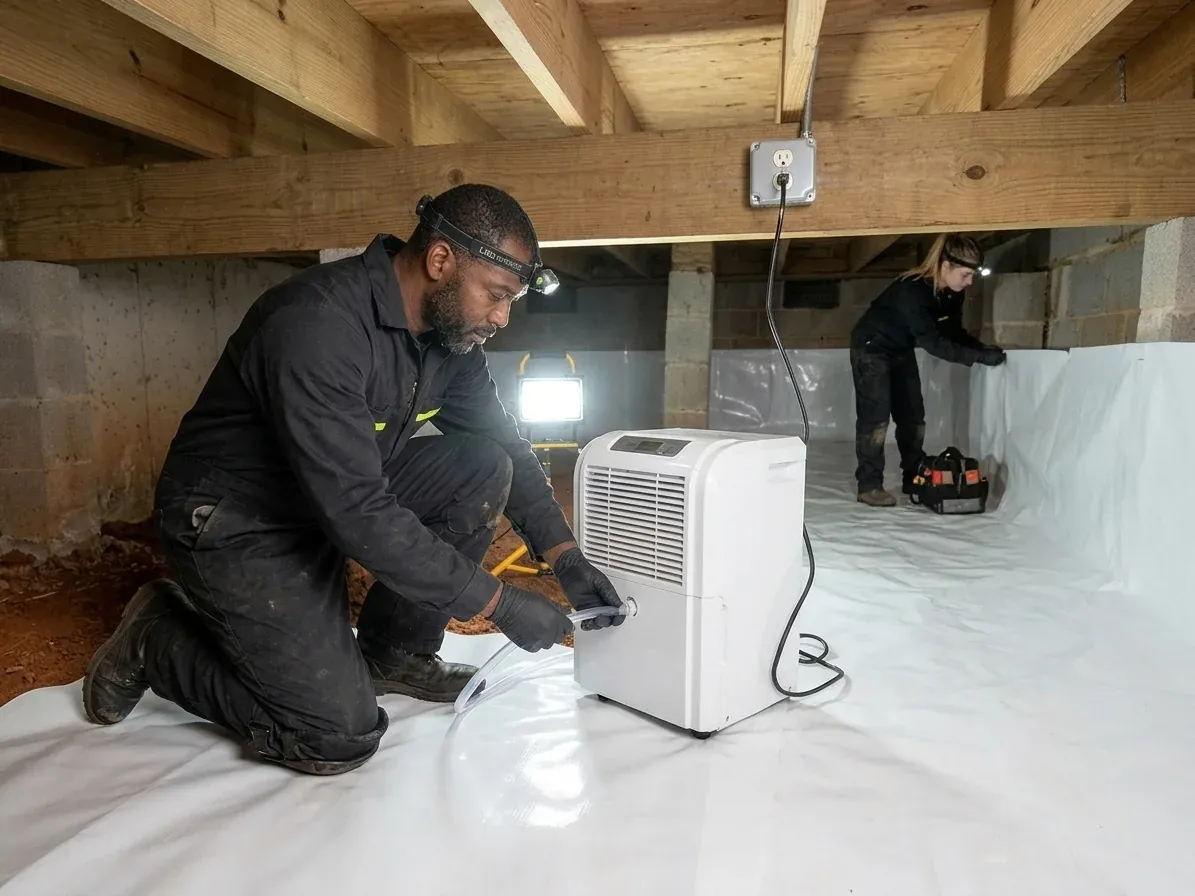
The dehumidifier goes in on its own circuit and drain, the county does its final inspection, and the space is brought down to target humidity.
Pricing
What it costs in Charlotte
Real ranges for 2026, so the quote is not a surprise. Square footage, height and water drive the number.
Full price breakdown| Work | Typical range | |
|---|---|---|
| Full encapsulation | 20-mil liner on floor and walls, taped seams and piers, sealed vents and rim, dehumidifier, permit. Typical 1,200–2,000 sq ft crawl space. | $6,300–$10,000 |
| Vapor barrier only | New 10–20 mil ground cover over the dirt, vents left as they are. Fixes ground moisture, not humid vent air. | $1,500–$4,000 |
| Crawl space dehumidifier | Installed crawl space unit with condensate drain and a dedicated outlet. Included in most full jobs. | $1,800–$3,000 |
| Drainage + sump pump | Interior perimeter drain in gravel, sealed sump basin and pump, discharge line. | $2,000–$5,000 |
How this works
One request. One local contractor.
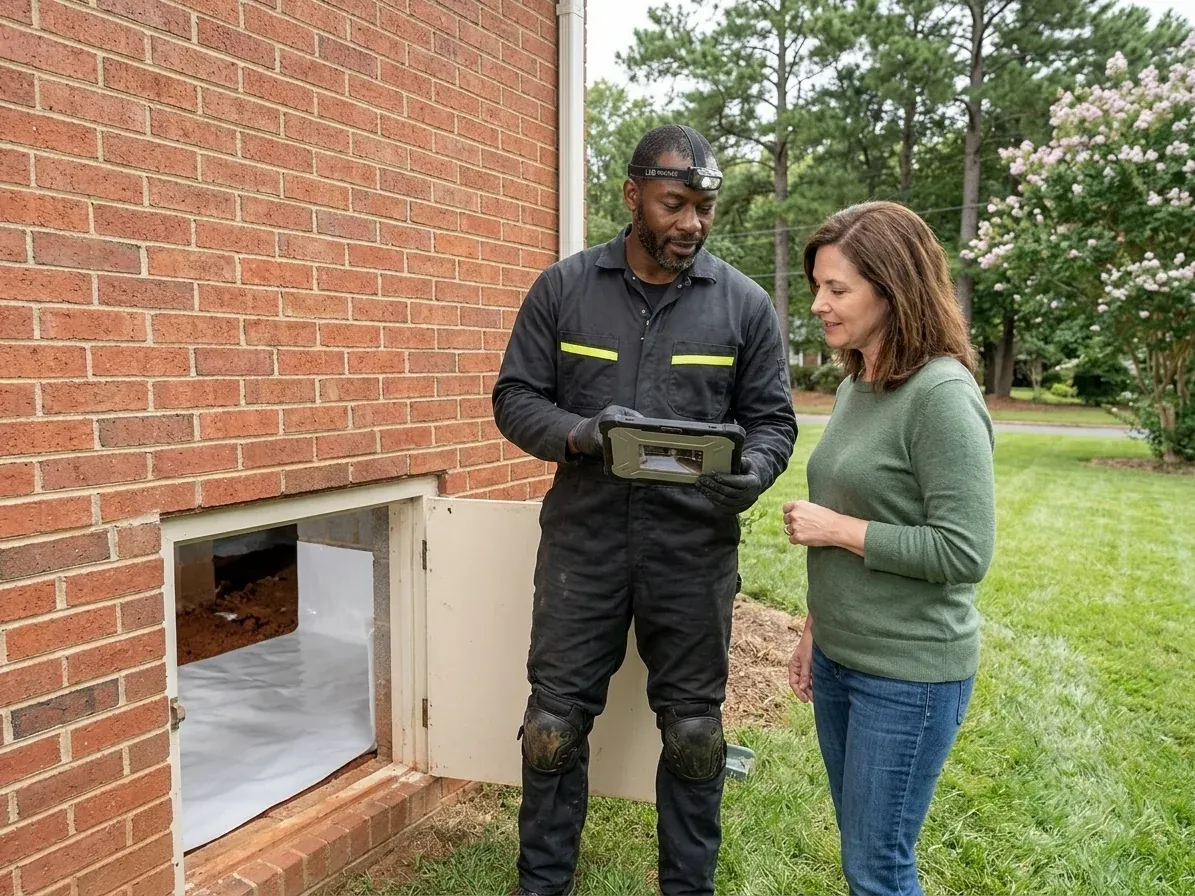
Charlotte Crawl Space Pro is a referral service. When you book an inspection, your request goes to one independent crawl space contractor who works in your part of the metro. They call you to set a time, do the inspection, give you a written quote, pull the permit and do the work under their own license and warranty.
Your information is never put on a lead list or sent to five companies at once. The contractor may pay us for the referral; it does not change your price.
Service area
Charlotte and the towns around it
282xx
Charlotte
Dilworth, Myers Park, Plaza Midwood, NoDa, SouthPark, Ballantyne, University City, Steele Creek
28078 · 28031 · 28036 · 28115 · 28117
North
Huntersville, Cornelius, Davidson, Mooresville
28104 · 28105 · 28227 · 28075 · 28025 · 28027
East
Matthews, Mint Hill, Harrisburg, Concord
28134 · 28079 · 28173 · 28110 · 28112
South
Pineville, Indian Trail, Weddington, Waxhaw, Monroe
28052 · 28054 · 28056 · 28012 · 28120
West
Gastonia, Belmont, Mount Holly
29708 · 29715 · 29707 · 29730 · 29732
South Carolina
Fort Mill, Tega Cay, Indian Land, Rock Hill
FAQ
Questions Charlotte homeowners ask
Q01 What is crawl space encapsulation?
It turns the vented, dirt-floored space under your house into a sealed, dry one. The floor and walls are covered with a heavy reinforced vapor barrier (usually 20-mil), seams and piers are taped, foundation vents and the rim joist are sealed, and a dehumidifier or conditioned air keeps humidity in check. Standing water is drained out first, and damaged insulation or wood is dealt with along the way.
Q02 How much does crawl space encapsulation cost in Charlotte?
Most full encapsulations on Charlotte-area homes land between $6,300 and $10,000. That covers a typical 1,200–2,000 sq ft crawl space with a 20-mil liner on floor and walls, sealed vents, a crawl space dehumidifier and the permit. A vapor barrier alone runs about $1,500–$4,000. Drainage, mold treatment, insulation removal and wood repair are priced separately once someone has actually been under the house. See the pricing page for the full breakdown.
Q03 Do I need a permit to encapsulate a crawl space in North Carolina?
Yes. The NC Office of State Fire Marshal's interpretation (updated December 2025) says converting a vented crawl space to a closed crawl space under Section R409 of the NC Residential Code needs a permit regardless of cost, because every allowed moisture-control method (a dehumidifier, supply air from the HVAC system, an exhaust fan) is a mechanical or electrical change. It is one permit with building, mechanical and electrical inspections. In Mecklenburg County that permit comes from Mecklenburg County Code Enforcement; Union, Cabarrus, Gaston and Iredell have their own offices. The contractor pulls it.
Q04 Shouldn't crawl space vents stay open so it can breathe?
That was the old thinking. In a Charlotte summer the outdoor dew point sits in the upper 60s to low 70s °F, while the soil keeps the crawl space cooler than that. When that humid air comes through the vents and touches cooler joists, ducts and pipes, it condenses. Open vents bring water in from June to September. That is why NC code allows closed crawl spaces as an alternative to vented ones.
Q05 Is a 20-mil liner required, or will 6-mil plastic do?
The code minimum for a closed crawl space ground cover is 6-mil polyethylene with lapped seams. 20-mil reinforced liner is a durability choice: it survives plumbers, HVAC techs and pest inspectors crawling over it for decades, and it holds up better on rocky red clay. Most full encapsulations in the area use 12- to 20-mil.
Q06 Will encapsulation help with musty smells and humidity in the house?
Usually, yes. Air moves up from the crawl space into the living space through gaps around pipes, wires and ducts, so a damp, musty crawl space makes a damp, musty first floor. The EPA recommends keeping indoor humidity below 60%, ideally 30–50%. A sealed crawl space with a dehumidifier set around 50–55% removes the biggest moisture source under the house.
Q07 How long does the job take?
The inspection takes about an hour. Once the permit is issued, most installs take one to three days, longer if drainage or wood repair is needed first. You do not need to leave the house; nearly all of the work happens under it.
Q08 Will encapsulation hide termites?
It shouldn't. Charlotte sits in a moderate-to-heavy termite zone, so a good installer stops the wall liner a few inches below the sill plate or uses a clear inspection strip so your pest company can still see the top of the foundation. Ask about it at the inspection; it matters for your termite bond.
Q09 What about radon?
Mecklenburg County is in EPA Radon Zone 3 (low potential), but radon varies house to house and only a test tells you. A sealed liner is also the base layer of a radon mitigation system, so if a test comes back at 4 pCi/L or higher, a fan and vent pipe can be added under the same liner.
Q10 Do you work in South Carolina?
Yes, the Fort Mill, Tega Cay, Indian Land and Rock Hill side is covered. York and Lancaster County permits follow South Carolina's rules instead of North Carolina's R409, and the contractor handles whichever applies.
Q11 Who actually does the work?
Charlotte Crawl Space Pro is a referral service. When you request an inspection we pass it to one independent, local crawl space contractor who calls you, inspects, quotes and does the work under their own license and warranty. We may be paid by that contractor for the referral. Your request is never sold to a list or sent to multiple companies.
Free crawl space inspection.
Moisture readings, photos of everything under the house, and a written quote. No obligation.